Disclosure: As an Amazon Associate I earn from qualifying purchases.
Links below use your Amazon Associate tag. Check current product details, price, availability, and suitability on Amazon before buying.
Related products and resources
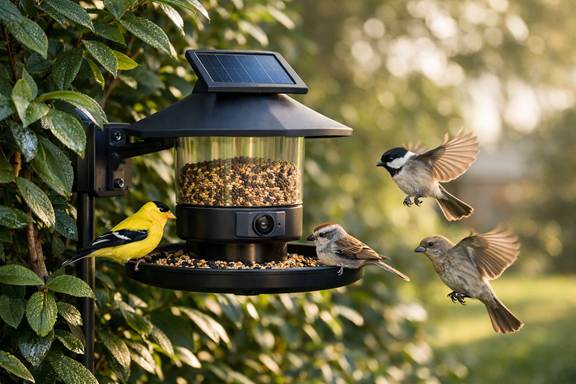
A solar smart bird feeder combines wildlife feeding with connected outdoor observation.
A solar smart bird feeder with camera lets you watch visiting birds while the feeder handles much of the routine recording and notification work. Instead of checking a traditional feeder manually, you can use a connected camera to view activity, save clips, and sometimes receive alerts when motion is detected or a bird is identified.
The category includes products marketed under different brand names and sold through garden retailers, warehouse clubs, and online stores. Features vary significantly, so the best choice depends on your yard, Wi-Fi coverage, preferred bird food, and tolerance for app subscriptions.
What Is a Solar Smart Bird Feeder with Camera?
This device combines a seed hopper with an outdoor camera and a small solar panel. The panel helps replenish the battery in daylight, while the camera records activity near the feeding perch. A companion app may provide live viewing, motion notifications, cloud storage, or bird-identification tools.
Solar power reduces the need to remove the feeder for frequent charging, but it does not make the system maintenance-free. Shade, short winter days, dirty panels, heavy recording, and cold temperatures can all affect battery performance. Wi-Fi quality is equally important because most connected feeders rely on a home network to transfer images or video.
Key Features to Compare
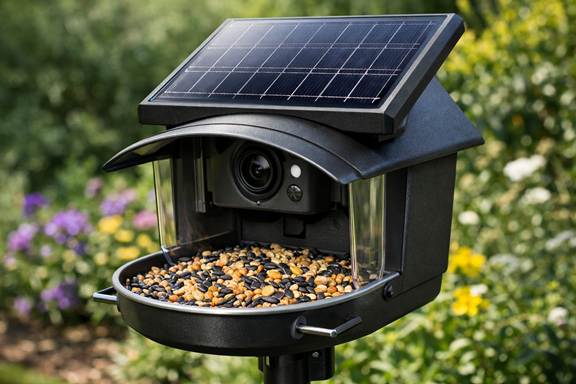
Panel position, camera framing, and feeder access are important comparison points.
Camera quality and field of view
Look beyond a headline resolution. A useful bird feeder camera should provide a clear view of the perch, sensible framing, and adequate performance in changing outdoor light. Wide-angle coverage can capture more activity, while a narrower view may produce larger images of birds at the feeding port.
Check whether the camera supports night recording, motion detection, two-way audio, video clips, or still photographs. These features are not equally useful for every backyard, and some may require an additional service plan.
Solar charging and battery design
Compare the panel’s position, adjustability, and exposure requirements. A panel facing an open section of sky generally has a better opportunity to collect energy than one permanently shaded by a roof or dense tree canopy. Look for a battery that can be removed or charged conveniently when sunlight is limited.
Connectivity and smart alerts
Confirm the required Wi-Fi band and estimate the signal strength where the feeder will be installed. An impressive camera is less useful if the connection drops frequently. Also investigate how alerts work: some systems notify you about motion, while others add optional bird-recognition features or activity summaries.
Feeder construction and maintenance
Weather resistance, drainage, a secure roof, and easy cleaning are essential. Seed exposed to rain can spoil or clump, while narrow compartments may be difficult to empty. A removable tray or hopper makes routine cleaning simpler. Consider whether the design discourages squirrels and larger animals without making access difficult for the birds you want to attract.
How to Set Up a Solar Smart Bird Feeder
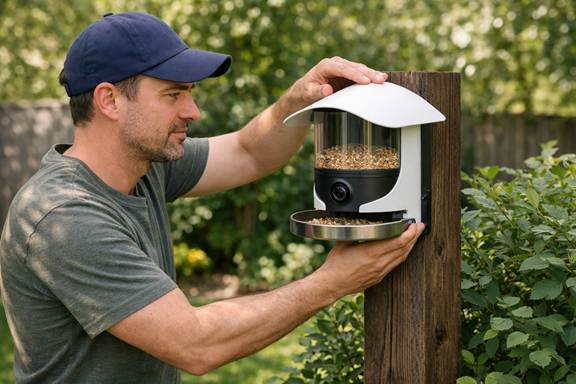
A careful installation helps balance sunlight, Wi-Fi access, bird safety, and camera visibility.
Start by charge-testing the unit according to the manufacturer’s instructions and install the app before mounting it permanently. Connect the feeder to Wi-Fi indoors if possible, then check that the camera view includes the perch and feeding area.
Choose a stable location with open visibility and enough space for birds to approach. Avoid placing it directly beside a window, where collisions may be more likely, and keep it far enough from dense cover to reduce easy access for predators. Nearby shrubs can provide shelter, but branches should not allow squirrels to leap directly onto the feeder.
After mounting, adjust the solar panel toward the brightest practical exposure. Add a modest amount of suitable seed at first, then watch how quickly it is consumed. Test notifications and review saved footage before finalizing the camera angle.
Benefits and Limitations
The main benefit is convenient observation. A camera can reveal species and behaviors that are easy to miss, while solar assistance can reduce charging interruptions. App alerts may also make birdwatching more accessible for people who cannot spend long periods outdoors.
The limitations are just as important. Solar charging depends on weather and placement. Wi-Fi problems can interrupt uploads, and bird-identification software may make mistakes. Cleaning, refilling, firmware updates, and battery care remain part of ownership. Some models may also place advanced storage or recognition features behind a subscription, so read the current service terms before buying.
How to Choose the Right Model
Create a short checklist before comparing products:
• Location: Confirm sunlight, Wi-Fi reach, and a safe mounting point.
• Viewing goals: Decide whether you need photographs, live video, alerts, or identification.
• Maintenance: Prefer accessible parts, drainage, and simple cleaning.
• Power: Compare solar-panel placement, battery access, and backup charging.
• Privacy: Review storage, account requirements, and how footage is handled.
• Total cost: Include accessories, replacement parts, and any optional subscription.
A well-designed feeder with dependable connectivity and easy maintenance may be more satisfying than a model with the longest feature list. Read current specifications carefully because camera resolution, app functions, compatibility, and included accessories differ between products.
In short, a solar smart bird feeder with camera is best viewed as a small outdoor monitoring system rather than a completely hands-off feeder. Choose the model that matches your sunlight, network, bird food, and observation habits, then prioritize reliable installation and regular cleaning over impressive specifications alone.